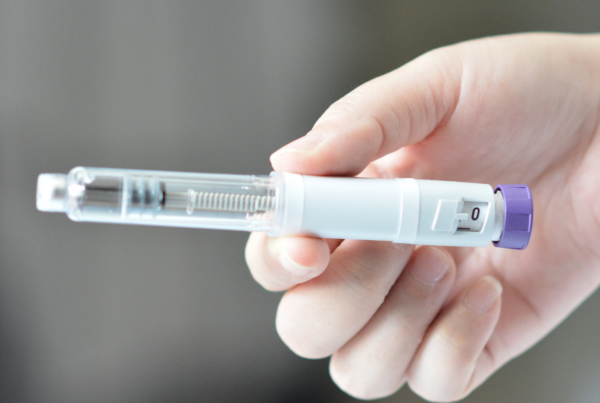

If you have heard the word Retatrutide, or “Reta”, recently, you’re not alone.
The latest weight-loss injection has been appearing across social media, fitness communities and online conversations, with some impressive claims being made about how much weight people can lose.
But this week, the conversation took a more serious turn in Ireland.
Irish obesity specialists have warned that people are presenting to hospital after using Retatrutide obtained outside regulated medical channels.
So, before the hype gets ahead of the facts, here is what you need to know.
What exactly is Retatrutide?
Retatrutide is an experimental medication being developed by Eli Lilly for obesity and related health conditions.
You may already have heard of GLP-1 medications. Retatrutide goes a step further.
It is what’s known as a triple receptor agonist, acting on three hormone pathways:
GLP-1
GIP
Glucagon
These hormones are involved in areas such as appetite, fullness, blood sugar regulation and metabolism.
Early and Phase 3 trial results have attracted enormous attention. In one Phase 3 obesity study, participants receiving the highest studied dose lost an average of 28.3% of their body weight over 80 weeks.
Those are significant results.
But there is a very important part of the story that can easily disappear on social media.
Retatrutide is not currently an approved treatment
As of August 2026, Retatrutide is still an investigational medicine.
It has not yet been approved by a medicines regulator for public use and is only legitimately available to participants in authorised clinical trials. Eli Lilly itself warns people not to use products claiming to contain Retatrutide outside its clinical trials.
That means a vial bought online, through social media, from a gym or from another unregulated source is not the same thing as receiving an approved prescription medicine through appropriate medical care.
You may not know exactly what is in it, how much is in it or how it has been produced and stored.
Why are Irish doctors talking about it now?
On 23 August, RTÉ reported that Irish hospitals were seeing patients presenting with side effects after using Retatrutide.
Professor Donal O’Shea, a leading Irish obesity specialist, warned about people obtaining the substance through gyms and other unofficial channels. One reported patient required hospital treatment following vomiting and kidney problems.
This sits within a much larger problem.
Earlier this year, the Health Products Regulatory Authority reported that 48,752 GLP-1-type products were detained in Ireland during 2025, compared with 1,582 the previous year.
Some products marketed as GLP-1 patches were tested and found not to contain the ingredient claimed on their packaging.
The message isn’t that weight-loss medication is inherently “good” or “bad”.
The message is that medical treatment needs to be medical treatment.
But aren’t the Retatrutide trial results impressive?
They are certainly promising.
That is exactly why Retatrutide is being studied so extensively.
But clinical trials are carefully controlled. Participants are assessed, doses are managed and side effects are monitored.
Side effects reported in Retatrutide studies have included gastrointestinal problems such as nausea, diarrhoea, vomiting and constipation, and some participants discontinued treatment because of adverse effects.
Clinical research therefore shouldn’t be interpreted as permission to buy an experimental product online and try it yourself.
There is a big difference between promising research and an approved treatment suitable for an individual patient.
At Motivation, we think there is an even bigger conversation to have
The weight-loss world is becoming increasingly focused on one question:
“Which medication will help me lose the most weight?”
We think there is another question worth asking:
“What will help me manage my weight and health for the long term?”
For someone who is clinically eligible, weight-management medication can be an extremely useful tool.
But medication is still only one part of the picture.
It doesn’t automatically change years of habits around food.
It doesn’t automatically identify why you eat when you’re stressed, lonely, tired or emotional.
It doesn’t automatically change what happens on holidays, at weekends, after a difficult day at work or when your motivation drops.
And it doesn’t automatically give you a strategy for maintaining your progress.
That is why Motivation takes a different approach.
Medication may influence appetite. We work on what happens around food.
Rather than building a programme around an injection alone, our approach combines appropriate medical support with the behavioural side of weight management.
That means looking at areas such as:
Emotional and stress eating
Understanding the situations and feelings that influence eating can be just as important as understanding hunger.
Habits and routines
Long-term change often happens in ordinary moments, including shopping, portion choices, evenings on the sofa, weekends and social occasions.
Nutrition and body composition
The goal shouldn’t simply be to make the number on the scales smaller. Good weight management should also consider nutrition, protein intake, muscle and overall health.
Ongoing support
Weight management rarely follows a perfectly straight line. Regular support helps people understand setbacks rather than simply abandoning the process.
Maintenance
Losing weight is one challenge. Learning how to live at your new weight is another.
The next generation of weight-loss medication is exciting. But don’t forget the human being taking it.
Retatrutide may eventually become another important option in obesity treatment.
For now, however, it remains an investigational medicine and should not be purchased or used outside an authorised clinical trial.
The wider lesson is perhaps more important.
The future of weight management isn’t about choosing between medication or behaviour change.
For many people, the best approach may involve appropriate medical treatment alongside the skills, behaviours and support needed to manage weight for the long term.
Because an injection may be a powerful tool.
But the goal isn’t simply to lose weight.
It is to build a healthier way of living that you can sustain.
Considering medical weight-management treatment?
At Motivation Weight Management Clinics, eligible clients can explore medically supported weight management alongside our Behaviour Modification Programme and ongoing personalised support.
Book an assessment to discuss the options that may be appropriate for you.
This article is for general educational purposes only and does not constitute medical advice. Retatrutide is an investigational medicine and is not currently approved for public use. Always discuss weight-management medications with an appropriately qualified healthcare professional.