Sunday Motivation: Stop Waiting for the Perfect Monday
For years, David Doyle believed that losing weight meant one thing: being hungry.
His attempts followed a familiar pattern. He would drastically cut back, endure a few miserable days, and eventually find himself reaching for a hot cross bun covered in butter. The diet would end, the old habits would return, and lasting progress would remain out of reach.
Then a routine visit to his doctor changed the conversation.
David’s blood pressure was 148/89, and his doctor suggested that medication might be necessary. There is nothing wrong with taking medication when it is needed, but David wanted to know whether there was anything else he could do.
His doctor’s answer was simple: try to lose some weight.
That sentence became David’s turning point.
The real problem wasn’t willpower
David had spent years assuming that hunger was evidence of progress.
“If you’re hungry, you’re losing weight,” he believed.
But hunger wasn’t helping him succeed. It was making consistency almost impossible. He could follow a restrictive plan for a few days—perhaps even a week—but eventually deprivation would win.
This time, he tried a more structured approach. He had guidance on what to eat, regular support, clear goals and someone to help him stay accountable.
Most importantly, he discovered that he could make progress without feeling hungry all the time.
The meals suited him. He ate plenty of protein and vegetables, became more aware of his carbohydrate intake and stopped trying to survive on willpower alone.
The change wasn’t simply about food. David also began noticing the moments that prompted him to eat.
A small success could become a reason to celebrate with chocolate mousse. A disappointment could lead him towards comfort food. These choices often happened automatically, before he had even recognised the emotion behind them.
Once he could see the pattern, he could interrupt it.
That is one of the most useful lessons in David’s story:
You cannot change every feeling, but you can change what you automatically do next.
Progress without perfection
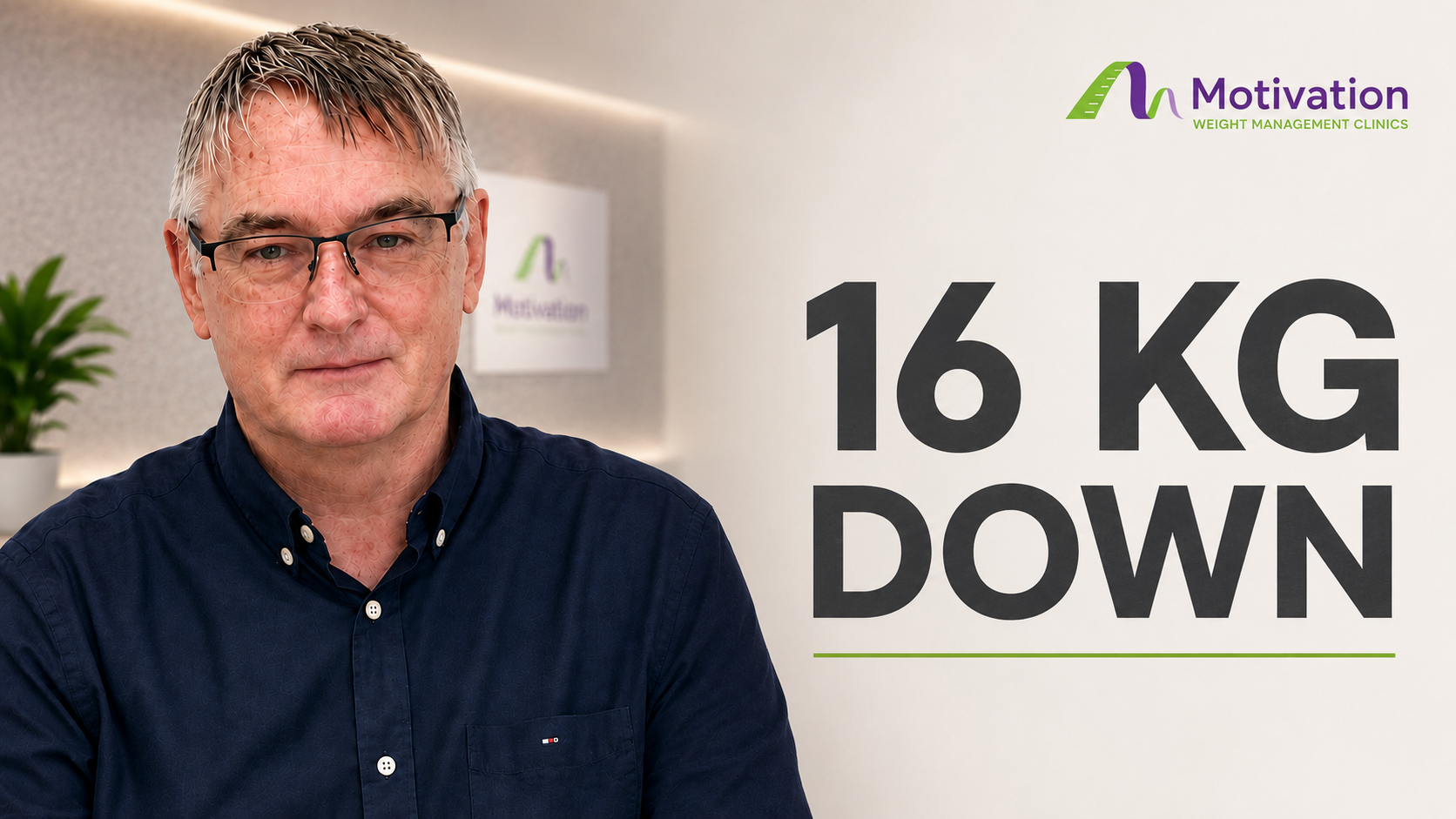
Over four months, David lost 16kg, moving from approximately 96kg to 80kg.
His belt came in by two notches. His clothes felt looser. He found it easier to move, and measurements such as his body fat began trending in the right direction.
He also recorded a blood-pressure reading of 114/73 without beginning blood-pressure medication. A result that delighted him. Individual health outcomes vary, of course, and medical decisions should always be discussed with a qualified healthcare professional.
But David’s transformation did not require him to become, as he puts it, “a saint.”
He still enjoys a couple of pints at the weekend. He goes to gigs and matches. He has a busy social life. He simply approaches those occasions with more awareness and a plan.
That distinction matters.
A sustainable lifestyle should not make you feel that all the joy has disappeared from your life. It should help you enjoy your life without allowing every celebration, disappointment or social occasion to undo the progress you have made.
Don’t call it a challenge before it begins
With a holiday approaching, David repeatedly told himself:
“It’s going to be a challenge.”
That may sound harmless, but the words we repeat can quietly shape our expectations. If we decide in advance that an occasion will defeat us, we are already rehearsing defeat.
So David began changing the picture in his mind.
Instead of assuming the holiday would derail him, he created a plan. He could choose his meals thoughtfully, drink water alongside alcohol, keep active, swim and still enjoy himself.
The goal was not to return from holiday feeling deprived. It was to return feeling good.
Planning does not remove spontaneity from life. It protects the things that matter to us when life becomes unpredictable.
A difficult day is not a failed journey
David also learned to look at the overall direction of his progress.
Some weeks produced a satisfying drop. Others were slower. Occasionally, the numbers barely moved. But the long-term trend continued in the right direction.
That is a healthier way to measure almost any meaningful change.
One imperfect meal does not erase a month of good choices. One missed walk does not make you inactive. One difficult week does not mean you are back where you started.
Progress is a direction—not a demand for perfection.
When you slip, guilt will encourage you to abandon the journey. Self-awareness will help you resume it.
Your Sunday reset
As you prepare for the week ahead, take five quiet minutes and ask yourself:
- What is one pattern that has been keeping me stuck?
- When am I most likely to fall back into it?
- What simple plan can I put in place before that moment arrives?
- Who could provide the guidance or accountability I need?
- What action can I take today instead of postponing it until Monday?
You do not need to transform everything this week.
Choose one meal differently. Plan for one social occasion. Take one walk. Make one appointment. Ask one person for support.
David’s advice to anyone feeling overwhelmed is refreshingly direct:
Do your research. Make the appointment. Put a system in place—and do something.
The first step does not have to be dramatic. It simply has to be real.
This Sunday, stop waiting to feel perfectly ready.
Make a plan. Take the step. Let consistency do the rest.