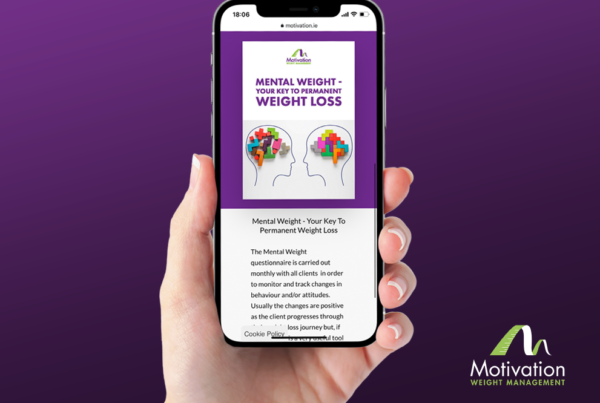

Mental Health Awareness Week is a reminder that not everything weighing us down can be seen.
When we think about weight, we often think about a number on the scales. But there is another kind of weight many of us carry every day — the thoughts, emotions, habits and experiences that can influence how we feel and how we eat.
At Motivation, we call this Mental Weight.
What is Mental Weight?
Mental Weight is the psychological and emotional load that can influence our relationship with food and weight.
It can include stress, emotional eating, negative self-talk, learned habits, low confidence, all-or-nothing thinking and the pressure we place on ourselves to be “perfect”.
You may recognise thoughts such as:
“I’ve ruined today, so I might as well start again Monday.”
“I know what I should eat, but I still find myself reaching for food when I’m stressed.”
“I’ve tried so many times before. Why would this time be different?”
These thoughts can feel small in isolation. Over time, however, they can become part of a repeated cycle.
Sometimes Hunger Is More Than Hunger
We do not always eat because our body physically needs energy.
Food can become connected with comfort, reward, boredom, stress, celebration or routine.
A difficult day at work might trigger the urge for something comforting. Sitting down to watch television might automatically make us think about snacks. Feeling disappointed with ourselves might lead to eating, followed by guilt and another promise to “be good tomorrow”.
These patterns do not simply disappear because we know more about nutrition.
Understanding why we eat can be just as important as understanding what we eat.
Mental Health and Our Relationship With Food
Mental Health Awareness Week gives us an opportunity to look beyond the physical side of health.
Stress, mood, sleep and emotional wellbeing can all influence everyday behaviours, including eating habits.
That is why sustainable weight management should not be reduced to willpower.
Instead of asking:
“Why can’t I stick to a diet?”
It may be more helpful to ask:
“What is happening when I find it hardest to make the choices I want to make?”
That small change in perspective can replace judgement with curiosity.
Five Questions to Help You Understand Your Mental Weight
This week, take a few minutes to notice your own patterns.
1. When do I eat when I am not physically hungry?
Look for situations, emotions or routines that regularly trigger eating.
2. What am I feeling at that moment?
Stress? Boredom? Loneliness? Tiredness? Frustration? Reward?
Simply identifying the emotion can help create awareness.
3. How do I speak to myself after a setback?
Would you speak to a friend in the same way?
One meal or one difficult day does not erase your progress.
4. Are my expectations realistic?
Trying to be perfect can make one small deviation feel like failure. Sustainable change usually comes from consistent habits rather than perfection.
5. What is one behaviour I could understand better rather than immediately trying to eliminate?
Awareness often comes before change.
Progress Is More Than a Number
The scales can measure body weight.
They cannot measure improved confidence, a healthier relationship with food, recognising emotional hunger, responding differently to stress, building consistent routines or feeling more in control of your choices.
Those changes matter too.
This Mental Health Awareness Week, consider the weight that cannot be seen.
Understanding your Mental Weight is not about judging yourself or finding another thing to “fix”. It is about becoming more aware of the thoughts, emotions and behaviours influencing your choices.
Because sometimes meaningful change begins not with asking:
“How much do I weigh?”
but with asking:
“What am I carrying?”
Do You Know Your Mental Weight?
Our Mental Weight questionnaire is designed to help you explore some of the behavioural and emotional factors that may influence your relationship with food and weight.
Calculate your Mental Weight and start understanding the patterns behind your eating behaviours.
*This content is for general education and wellbeing awareness and is not a substitute for individual medicalDo You Know Your Mental Weight?
Mental Health Awareness Week is a useful reminder that wellbeing is not only about what we can see. Sometimes the heaviest things we carry are thoughts, habits, emotions and expectations.
At Motivation Weight Management, we call this Mental Weight.
When people think about weight management, the first thing that usually comes to mind is the number on the scales. But that number tells only part of the story.
For many people, eating is connected to much more than physical hunger. Stress, boredom, tiredness, difficult emotions, habits and even the environment around us can influence when, why and how much we eat.
Understanding these patterns can be an important part of creating lasting change.
What is Mental Weight?
Mental Weight is the psychological and behavioural side of weight management.
It includes the thoughts, emotions and learned habits that can influence our relationship with food.
You might recognise some of these experiences:
- Eating when stressed, overwhelmed or upset
- Reaching for food automatically while watching television
- Feeling that you have to finish everything on your plate
- Using food as a reward after a difficult day
- Starting a new diet with strict rules, then feeling guilty when you cannot maintain them
- Thinking, “I know what I should do, so why can’t I just do it?”
These behaviours are not simply about knowing which foods are healthy.
Often, they have developed gradually over many years.
Physical Hunger or Something Else?
One of the most useful skills in weight management is learning to pause and ask:
“What am I actually hungry for right now?”
Physical hunger usually develops gradually. You may notice sensations such as an empty stomach, lower energy or difficulty concentrating.
Emotional or habit-driven eating can feel different. The desire for food may appear suddenly, be connected to a particular food, or happen at a predictable time even when you are not physically hungry.
For example, someone may automatically look for something sweet when they sit down after work.
The food itself is only part of the pattern.
The brain may have learned an association:
Long day → sit down → eat something → feel comforted.
Recognising that connection does not mean judging yourself. It simply gives you more information about what is driving the behaviour.
Why Mental Health Matters in Weight Management
Mental wellbeing and eating behaviour can influence each other.
When we are stressed or emotionally drained, it can become more difficult to plan meals, sleep well, stay active or make considered choices around food.
At the same time, repeatedly feeling that you have “failed” at weight loss can affect confidence and create an exhausting cycle of restriction, overeating and starting again.
This is why sustainable weight management needs to look beyond calories and the scales.
The question is not only “What are you eating?”
It is also:
“What is happening around your eating?”
Take the Blame Out of Behaviour Change
Many people who struggle with their weight have spent years blaming themselves.
“I have no willpower.”
“I should be able to control this.”
“I always ruin my progress.”
But behaviour change becomes much easier to understand when we replace judgement with curiosity.
Instead of saying:
“Why did I do that again?”
Try asking:
“What was happening just before I ate?”
Were you tired?
Stressed?
Lonely?
Distracted?
Very hungry because you had skipped meals?
Was the food simply available and part of an established routine?
Understanding the trigger helps you work on the pattern rather than criticising yourself for the outcome.
Five Ways to Reduce Your Mental Weight
During Mental Health Awareness Week, try focusing less on perfection and more on awareness.
1. Pause before eating
Give yourself a few seconds to identify whether you are physically hungry or responding to an emotion, habit or environment.
2. Notice your triggers
Keep a simple note of when unplanned eating tends to happen. Patterns often become easier to recognise when we write them down.
3. Move away from all-or-nothing thinking
One meal or one difficult day does not undo your progress. Sustainable change is built through repeated behaviours, not perfect ones.
4. Create alternatives to food for emotional relief
Food can provide comfort, but it does not need to be the only tool available. A walk, conversation, music, rest or simply stepping away from a stressful situation may help.
5. Be curious rather than critical
Understanding yourself is more useful than judging yourself.
Weight Management Is More Than Losing Weight
For many people, the most valuable changes happen before there is a dramatic difference on the scales.
Understanding why you eat.
Recognising emotional triggers.
Feeling more in control around food.
Building routines you can continue long term.
Learning how to respond differently when life becomes stressful.
These are meaningful forms of progress too.
At Motivation, our approach focuses on both physical weight and Mental Weight, because sustainable change is not simply about following another diet. It is about understanding the behaviours behind eating and developing skills that can continue long after a weight-loss programme ends.
This Mental Health Awareness Week, Ask Yourself One Question
Do you know your Mental Weight?
Not the number on the scales.
The thoughts, habits and emotions you may be carrying around food.
Understanding them could be the first step towards changing your relationship with food in a more positive and sustainable way.
Your weight is part of the story. Your mind is part of it too.
Take the Mini Mental Weight questionnaire and begin understanding the thoughts and behaviours that may be influencing your eating.